

Article Sidebar
Main Article Content
Abstract
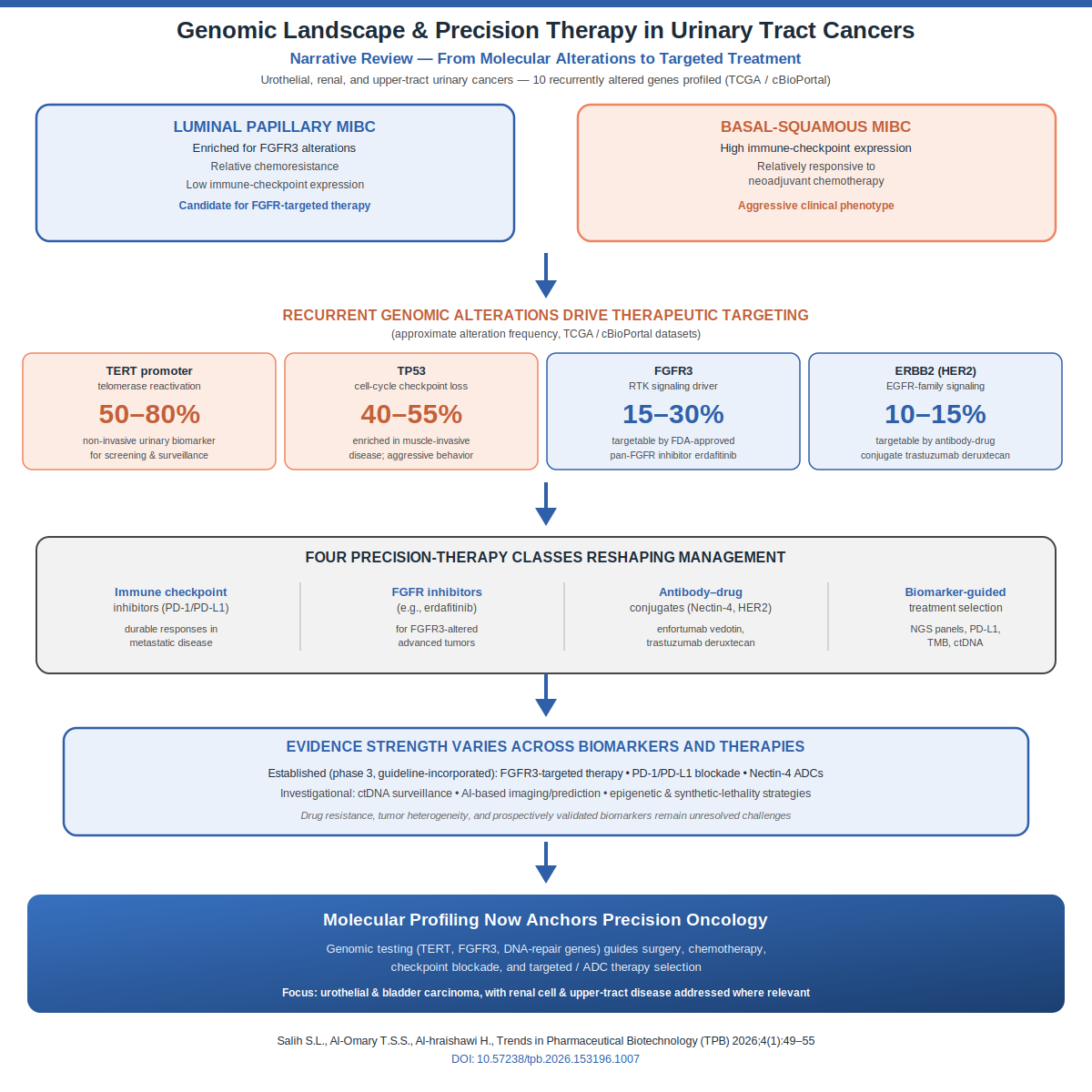
Urinary tract malignancies are a heterogeneous group of tumors arising from the kidney, renal pelvis, ureter, bladder, and urethra. Urothelial (transitional-cell) carcinoma is the most common histological subtype and accounts for the majority of malignancies of the bladder and upper urinary tract. Despite advances in detection and therapy, advanced disease carries substantial risk of recurrence, progression, and death. Molecular profiling over the past decade has identified recurrent genomic alterations that shape tumor behavior, prognosis, and treatment response, including changes in TP53, the TERT promoter, FGFR3, KDM6A, PIK3CA, ERBB2, RB1, STAG2, ARID1A, and DNA-repair genes. These alterations increasingly inform precision-medicine strategies. Immune checkpoint inhibitors, FGFR-targeted agents, antibody–drug conjugates, and biomarker-guided treatment selection are reshaping management alongside conventional surgery and chemotherapy. This narrative review summarizes the molecular etiology, diagnostic approaches, and therapeutic advances in urinary tract cancers, with an emphasis on urothelial and bladder carcinoma — the subtype for which molecular and clinical evidence is most mature — while also addressing renal cell carcinoma and upper-tract urothelial carcinoma where relevant. The review highlights the growing role of genomic characterization in individualizing patient care and distinguishes findings that are well established from those that remain investigational.
Keywords
Article Details
Copyright (c) 2026 Samer Lateef Salih , Thaer Saleh Sabor Al-Omary, Husam Al-hraishawi (Author)

This work is licensed under a Creative Commons Attribution 4.0 International License.